
Tech Talk: the engineering behind a Jewell windmill
The four questions we are asked most often by engineers, retailers and curious owners, answered in the same detail we would give a customer standing in the shop.
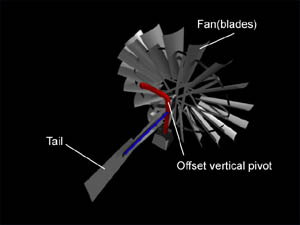
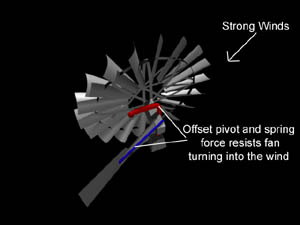
How does the Lil’ Jewell turn away from strong winds to prevent excessive speed?
High wind speeds create force on the blades that rotates the fan about a virtual axis out of the incoming wind. Because the fan pivots about an offset vertical axis and is held by spring force, the harder the wind pushes, the further the fan swings away from it.
This lowers the wind speed perpendicular to the fan face and so reduces rotational speed in high winds. The result is lower centrifugal force on the blades and framework, which means a longer service life for the windmill.
The same geometry is what makes the manual shut-off option possible: pull the tail parallel to the blades and the fan sits “out of the wind” and stops.
How and where are the windmills constructed?
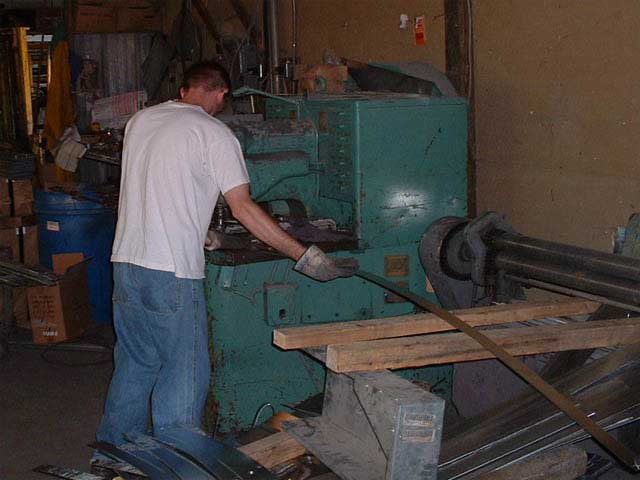
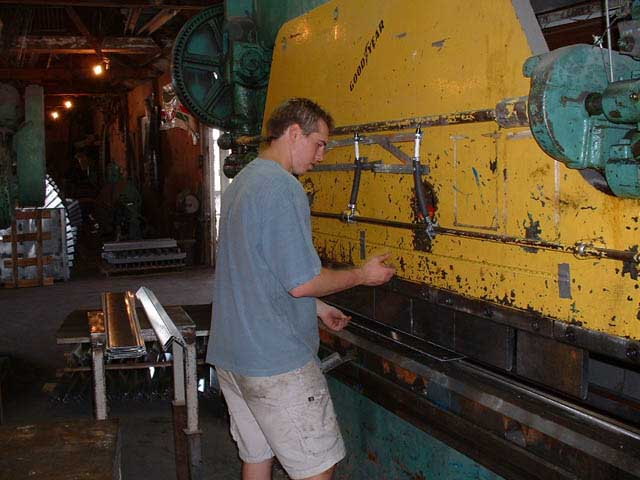
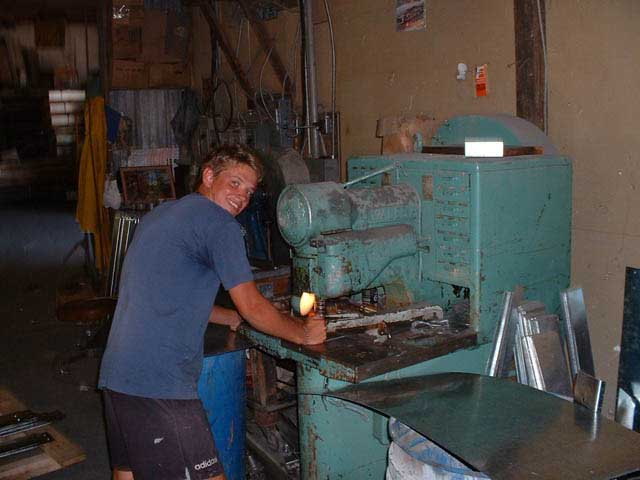
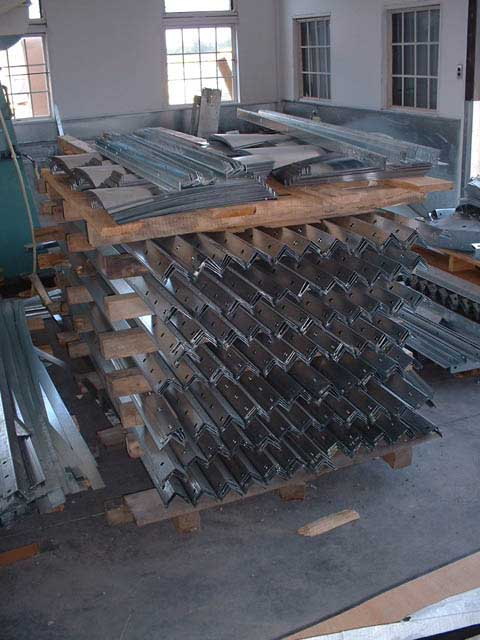
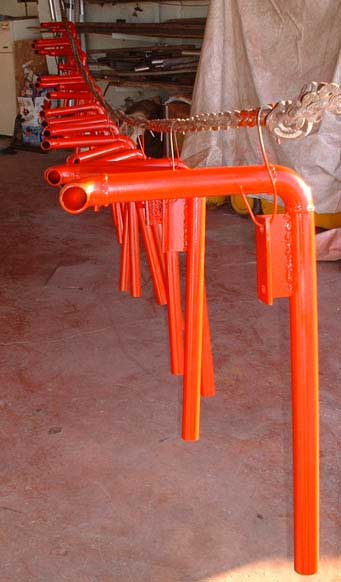
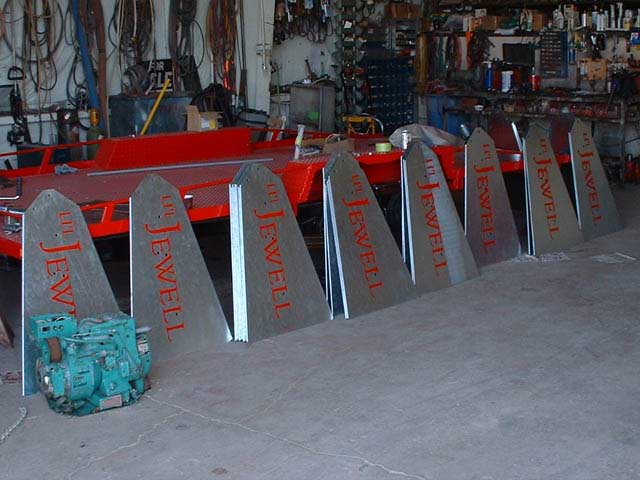
Our windmills are built in our metalworking shop north of London, Ontario, Canada. We use quality machinery, which ensures that all our parts fit together perfectly. These photographs give a quick overview of the construction process.
What is galvanized steel and how does it protect my windmill?
The material used in the construction of Jewell Windmills is ASTM A526 grade sheet steel. Its ultimate tensile strength ranges from 42,000 to 54,000 psi. The blades and tail vane are constructed from 16 gauge (0.059 in thick) steel, twice as thick as the 20 gauge (0.0359 in) steel used by the original windmills. The blades actually increase in bending strength by a factor of four when the thickness doubles, which is definitely advantageous in a hailstorm. The framework utilizes 11 gauge (0.1196 in) steel, and most other components are 14 gauge (0.0747 in).
A galvanized protective layer serves two main corrosive protection functions: barrier protection and sacrificial protection. The barrier protection refers to the film that stops oxygen and corrosives from reaching the steel surface. In addition to the barrier, the application of zinc supplies a sacrificial anode for protection of the steel. Zinc has a higher electro-chemical potential (it is more active) than steel. When zinc and steel are in contact in an electrolyte, the zinc corrodes in preference to the steel, which is protected. It is this feature that enables zinc to protect steel at cut edges.
The heavy Z700 galvanized protective coating used on Jewell Windmills is the thickest commercially available. Z700 designates that 700 grams per square metre of zinc is applied to the steel (both sides combined). That is nearly triple the Z275 (G90) coating thickness you would find on galvanized roof and siding applications, and even heavier than the Z610 coating on corrugated steel pipe culverts.
In short: the windmill is protected twice over — by a physical zinc barrier, and by zinc that sacrifices itself so the steel underneath does not rust.
How do the bearings work in the Lil’ Jewell?
The two sealed pillow block bearings provide quiet and smooth operation. Their low turning torque allows the windmill to spin in the lightest of breezes. The bearings are sealed and pre-greased, and they are enclosed for additional protection. Easy access is provided through the enclosure for additional greasing in the future.
Two axial locks are provided on each bearing unit to secure the 1 inch diameter fan shaft. The design life of the bearings is not limited by their rotational capacity. In fact, according to the manufacturer’s literature, the bearings will survive 28 years at a constant wind speed greater than 10 miles per hour for the supported weight.
Still have a technical question?
We are happy to talk through tower loading, base preparation or a custom finish before you order.